

 Back to blog
August 19: The Date Behind Every Photograph You've Ever Taken
Every photograph you take traces back to a single date. On August 19, 1839, the French government bought the daguerreotype process and released it to the world for free. That decision turned photography from a guarded experiment into a public tool. It's why we mark World Photography Day on this date every year.
The first photograph ever taken
The story starts earlier than 1839. In 1826 or 1827, Joseph Nicéphore Niépce set up a camera obscura in an upstairs window in Burgundy, France. A camera obscura is a dark box with a small hole or lens on one side. Light passes through the hole and projects an upside-down image of the outside scene onto the back wall.
People had used camera obscuras for centuries to trace drawings. Niépce wanted to skip the tracing and let the light do the work on its own.
He coated a pewter plate with bitumen of Judea, a natural tar that hardens when light hits it. He placed the plate inside the camera, aimed it at the view from his window and left it there for around eight hours.
Sunlight slowly hardened the bitumen where it struck the plate. The dark areas of the scene left the bitumen soft and unchanged. Niépce then washed the plate with lavender oil, which dissolved the soft parts and left a faint, permanent image behind.
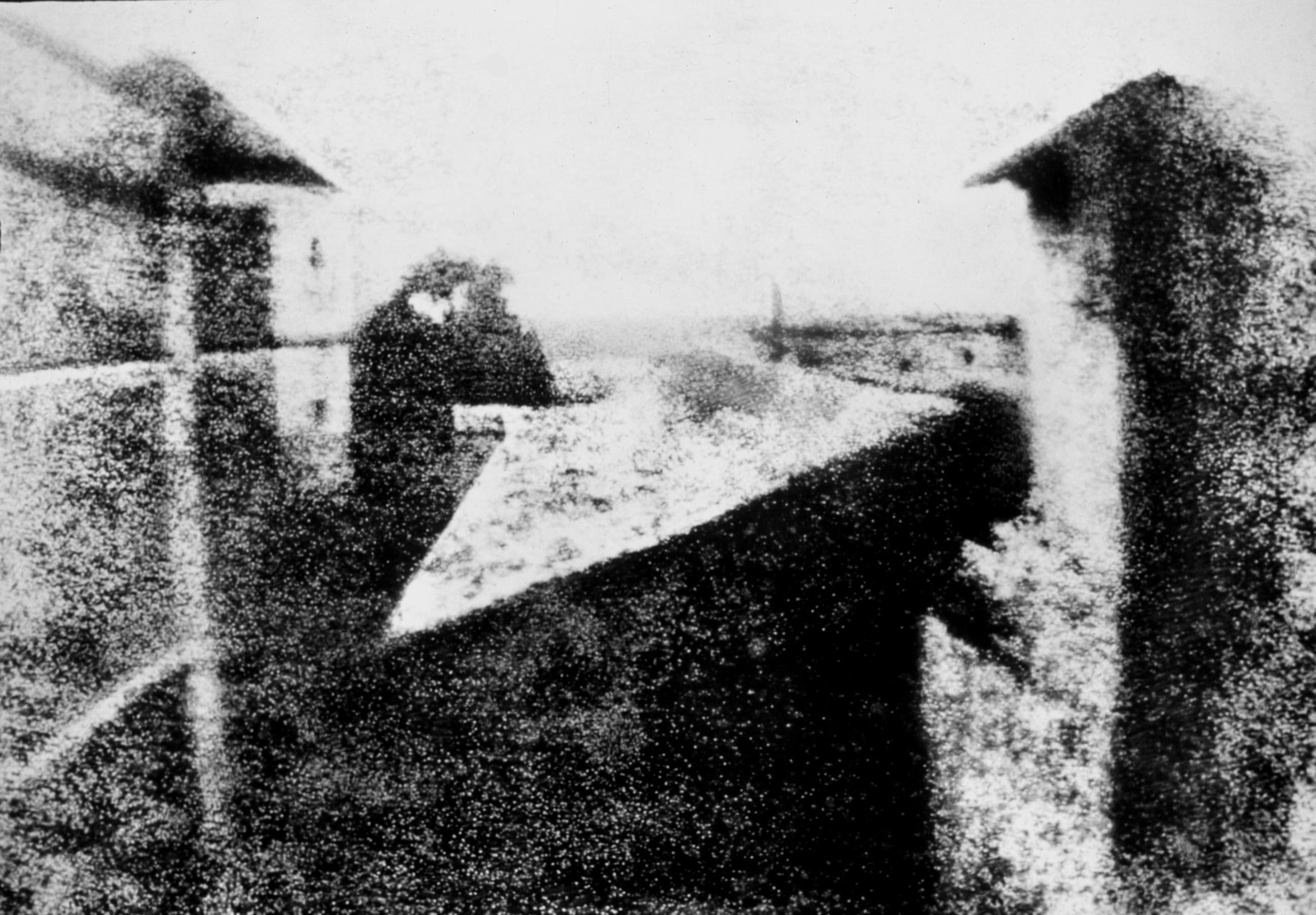 Photo: Joseph Nicéphore Niépce / Wikimedia Commons · Public Domain
The result is called "View from the Window at Le Gras." It's faint, rough and hard to read. But it's the oldest surviving photograph, and it proved that light alone could fix an image onto a surface.
How the daguerreotype worked
Niépce partnered with Louis Daguerre in 1829. They agreed to share their findings and split any profits. But Niépce died in 1833, before they could finish the work. Daguerre kept experimenting alone.
What he landed on was a completely different process. He started with a copper plate coated in a thin layer of silver, polished to a mirror finish. Then he exposed the plate to iodine vapor inside a sealed box. The iodine reacted with the silver and created a thin, light-sensitive layer of silver iodide on the surface.
The prepared plate went into a camera. The exposure took minutes instead of hours, a huge leap forward from Niépce's process.
After exposure, the plate looked blank. The image was there, but invisible. Daguerre held the plate face-down over a dish of heated mercury. The mercury vapor rose and bonded to the parts of the silver that light had struck, forming a visible image. A bath in a salt solution (later replaced by sodium thiosulfate) fixed the image in place so it wouldn't darken in sunlight.
The result was extraordinary. Each daguerreotype was a one-of-a-kind image on a shiny metal plate, sharp enough to show individual hairs and the texture of fabric. You held it in your hand and tilted it to catch the light at the right angle. No copies could be made from it. Every plate was an original.
The first photograph of a person
In 1838, Daguerre pointed his camera at Boulevard du Temple in Paris from a high window. The exposure ran for several minutes.
The boulevard was a busy street, full of carriages and pedestrians. But none of them stayed still long enough to register on the plate. They moved too fast for the long exposure and vanished like ghosts. The street appears empty.
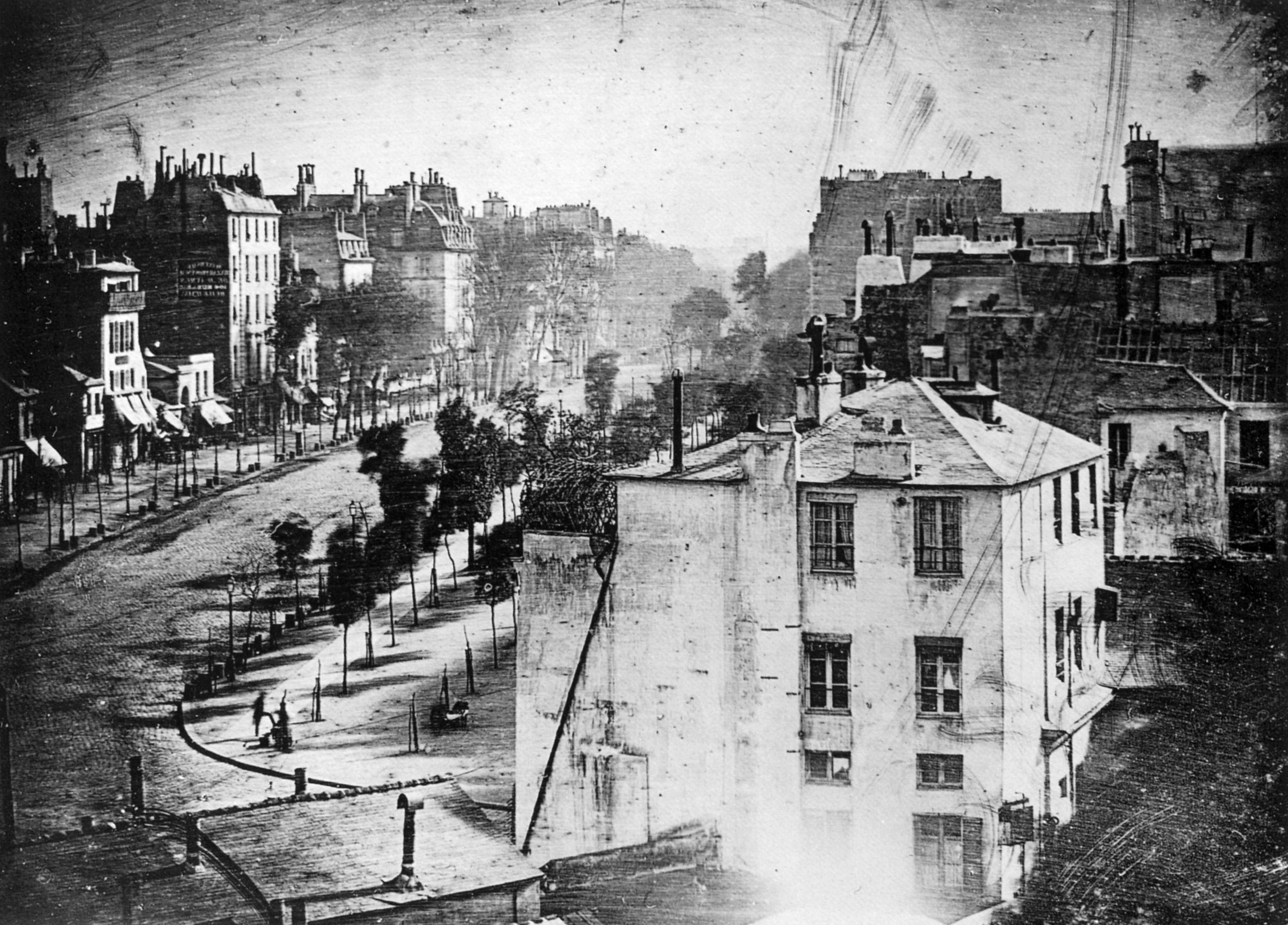 Photo: Louis Daguerre / Wikimedia Commons · Public Domain
Only two figures appear in the lower left corner. A man stands at the curb getting his boots polished. The bootblack kneels beside him. They held still long enough for the camera to catch them. That man is the first known human being ever captured in a photograph.
August 19, 1839: the day photography became free
The French government saw what the daguerreotype could do. Rather than let Daguerre sell licenses, they bought the patent outright and released the process as a gift to the world on August 19, 1839.
The announcement was made at a joint session of the French Academy of Sciences and the Academy of Fine Arts. The room was packed. Within weeks, the instructions had been translated and published across Europe.
Portrait studios opened in Paris, London and New York within months. People who had never seen their own face except in a mirror could now sit for a portrait. Photography was no longer a secret held by one inventor. It belonged to everyone.
What came after
The daguerreotype had limits. Each image was unique and couldn't be copied. The plates were fragile. Exposures still took too long for most moving subjects.
Other inventors pushed forward. William Henry Fox Talbot in England developed the calotype, a paper negative that could produce multiple prints from a single exposure. Frederick Scott Archer introduced the wet collodion process in 1851, which was faster and cheaper than both. By the 1880s, George Eastman was selling the Kodak camera with the slogan "You press the button, we do the rest."
Each step made photography cheaper, faster and more portable. But the starting point was always the same. August 19, 1839.
This year's theme: Home
The 2026 World Photography Day theme is "Home." The idea is simple. Photograph what home means to you and share it with the hashtag #WorldPhotographyDay.
For people in Armenia, "home" has a specific weight. It can mean the view of Ararat from your balcony or the courtyard of a building in Kentron. It can mean a grandmother's kitchen table or the village your family left two generations ago. The best photographs of home don't show the whole place. They show the one detail that makes it yours.
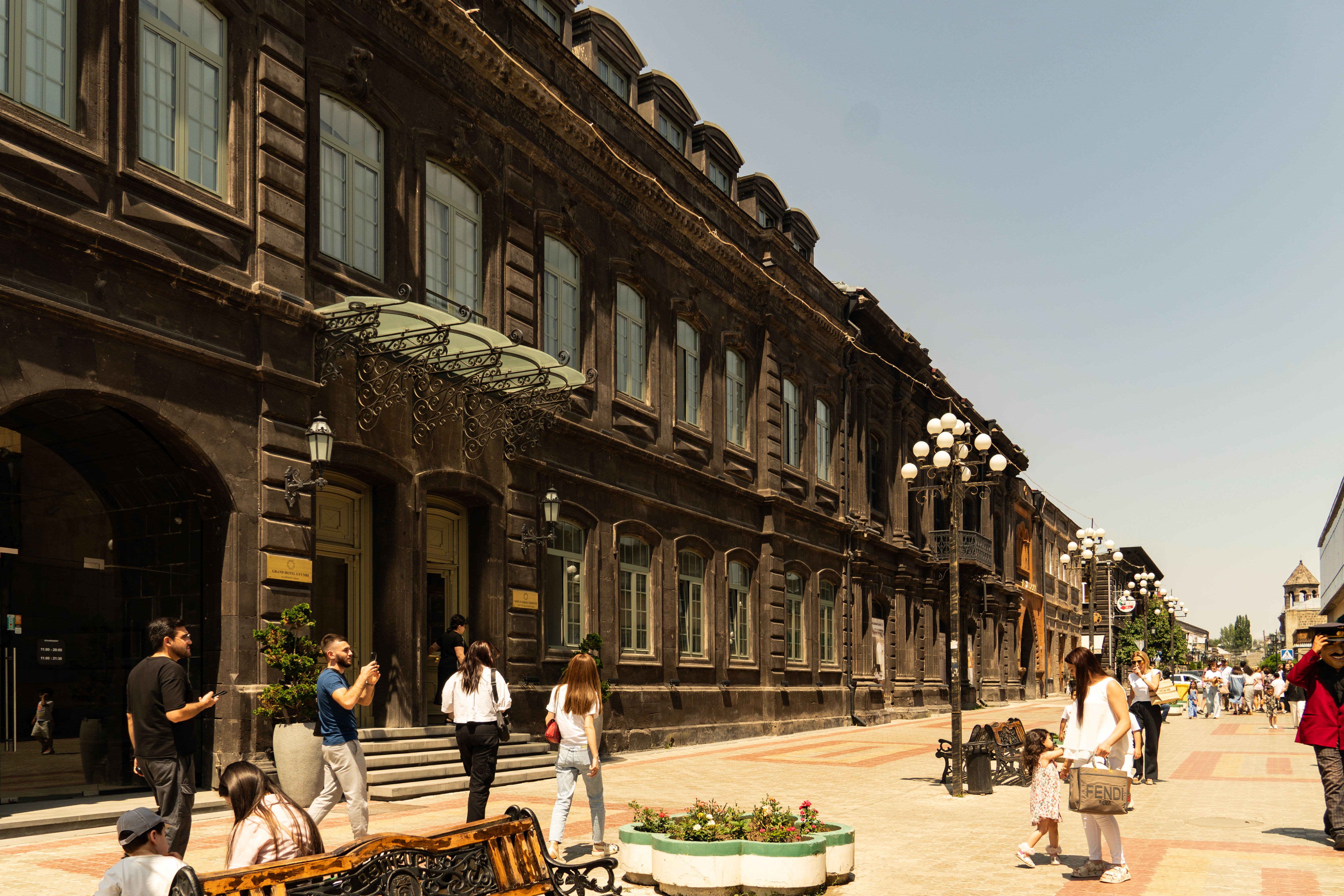 Photo: Shaghik Torosian
Where to shoot "Home" in Yerevan today
Start with what you see every day and ignore on purpose. The stairwell of your apartment building has light you've never paid attention to. The corner shop with the faded sign has been there longer than you have.
Cascade at golden hour gives you the whole city in one frame, but the interesting shots are the ones nobody else takes. A courtyard on Pushkin Street. The shadow pattern on the floor of a Soviet-era building. The fruit seller on Mashtots who's been standing in the same spot for years.
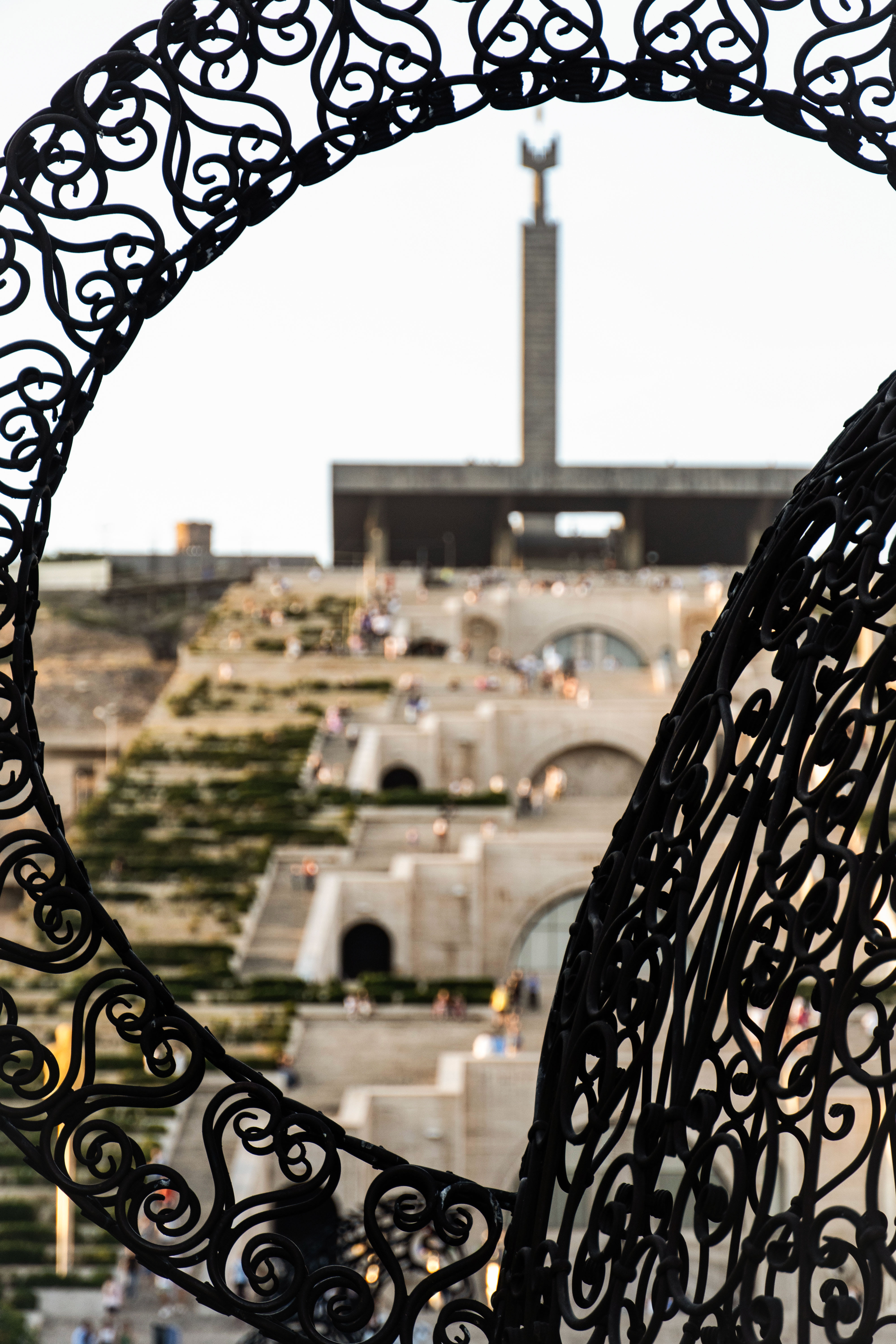 Photo: Shaghik Torosian
Late afternoon light in August hits the pink tuff buildings from the west and turns the whole city warm. If you're going to take one photo today, take it between 6 and 7 PM, when the stone glows and the shadows get long.
187 years later
Niépce needed eight hours and a pewter plate. Daguerre brought it down to minutes. Eastman put a camera in everyone's pocket. Now your phone does it in a fraction of a second.
The technology has changed completely, but the impulse hasn't. You see something, and you want to keep it. That impulse is 187 years old today.
Step outside with your camera and photograph whatever feels like home.
Booking a photographer for your own story
If you want someone to photograph your version of home, Frameet lists photographers who shoot across Armenia. A family portrait at a place that matters to you. A set of images that capture your neighborhood. The price is agreed before you commit. Meet your photographer, then go tell your story.